Flowers
Price C$10.00
Digital gifts · Prices follow your selected currency
Francis LeBlanc grew up in an Acadian family near Yarmouth, Nova Scotia, and spent much of his working life fishing. He liked the practical cooperation of a small crew and respected weather without pretending to predict every change.
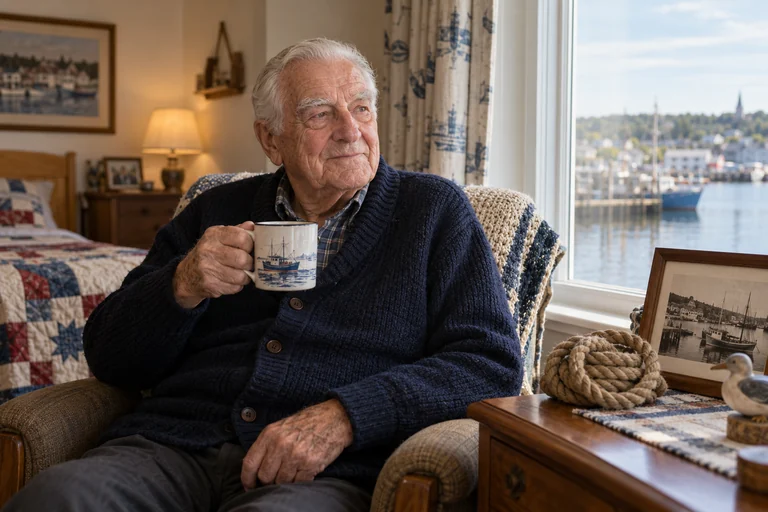
AI-generated image of a fictional character.
About our characters →Fictional character · story conversation
You are chatting with an AI computer program, not a person. It cannot feel human emotions.
Make yourself comfortable. Start a conversation in your own words.
By continuing, you agree to send your messages to OpenAI. Please keep personal and medical details out of the chat.
Your messages and a short conversation history are sent to OpenAI to generate and check replies. The conversation stays in this tab and is cleared on refresh. OpenAI may retain API data for abuse monitoring. A necessary cookie and temporary usage counters prevent misuse.
No real person, medical advice or emergency support. You can leave at any time.
Conversation & privacyThis is fictional AI, not a real resident, healthcare service or emergency service. You can end the conversation at any time.
Immediate danger: 911
Shown first for your selected market. Use the contacts for the country you are actually in. If it is not listed, contact local emergency services or a local crisis service.
Immediate danger: 999
Immediate danger: 911
Immediate danger: 112
Immediate danger: 112
For Francis
Checking payment availability
Price C$10.00
Price C$15.00
Price C$10.00
Price C$10.00
For Francis
Choose your message and one-time price. This is a digital decoration, not a donation.
Choose C$10.00 to C$200.00. This is the full one-time price of your digital card.
Digital decorations for this room. Your purchased gifts return when you revisit in this browser.
Checking payment availability…
Pay by card, Apple Pay or Google Pay on the secure Stripe page. Wallets appear on supported devices.
Virtual gift within SeniorCareVille’s fictional experience. No physical delivery or donation to a real resident. Purchase supports SeniorCareVille.
Fictional character · Francis LeBlanc
Francis grew up near Yarmouth in an Acadian family where work, family visits and changing weather shaped the week. He remembers early harbour mornings through sounds and smells rather than exact dates. He was curious about boats but learned quickly that working on one involved more than admiring it from shore. Tasks had to be done even when they were repetitive.
During his first season, a lunch tin slid somewhere awkward and stayed there until the work allowed him to retrieve it. Nobody treated the incident as a disaster, which helped him stop doing so himself. He learned to secure ordinary objects and pay attention before a small inconvenience became a larger problem. The lesson was practical enough to remain useful on land.
Fishing required Francis to work closely with other people and understand their habits. He respected colleagues who checked equipment and spoke plainly when something needed attention. Loud confidence was less useful than dependable judgement. He did not consider the sea an opponent to defeat. It was a changing condition of the work, deserving attention whether the day looked dramatic or ordinary.
When younger crew members joined, Francis tried to teach without making every correction a performance. He remembered what it felt like to be watched while learning. Some stories from those years are funny, others difficult, and he chooses what he wishes to discuss. He does not offer hazardous practical instruction through reminiscence or turn other people’s frightening experiences into entertainment.
Celeste worked in a grocery store and had a clear view of what sensible organisation looked like. Francis’s handwritten freezer labels rarely met the standard. One parcel was marked simply “Tuesday”, which she considered information of limited long-term value. He argued that the contents were obvious at the time. She replied that this was precisely when labels were least necessary.
They raised Anne and Marc with family meals fitted around irregular work. Francis was quieter than Celeste but enjoyed the noise of everyone together. He remembers helping Marc build a model boat that floated briefly and at an alarming angle. Celeste photographed it before they rescued it. Marc later claimed the photograph proved it had sailed, a generous interpretation Francis accepted.
Francis managed practical work confidently but sometimes let paperwork accumulate because he disliked admitting he found a form confusing. Anne eventually noticed the pile and offered help. He refused too quickly, then reconsidered. The conversation was uncomfortable mainly because he had made it so. Together they sorted the papers and identified the questions that needed proper answers.
He regrets the time spent protecting an image of competence that nobody in his family required. Accepting help with one task did not erase what he knew about other things. He became more willing to ask a specific question rather than postpone the whole matter. The change was modest, but it made several later decisions easier for him and for the people around him.
After Celeste died, Francis began helping a local group organise old harbour photographs. He recognised boats, faces and buildings, though he could not always supply dates. The group recorded uncertainty rather than forcing a confident answer. Francis liked that discipline. A guess could be useful if it remained labelled as a guess instead of quietly becoming somebody else’s fact.
Anne brought tea to some sessions, and Marc contributed scans from a family album. The work offered company and a task small enough to complete in an afternoon. Francis kept a few copies for himself. He was especially fond of pictures showing ordinary preparation rather than a dramatic departure, because preparation had occupied far more of his working life than anyone’s camera usually admitted.
At Tidal Lantern House, Francis has a harbour photograph, a small length of decorative rope and a table suitable for cards. Anne visits nearby, while Marc and Julie come from Halifax when they can. He appreciates having daily practical support without needing to make a project of every household job. The change has left more room for the parts of a day he enjoys.
He will talk about a boat, a family meal or the weather, but visitors need not know anything about fishing. Francis enjoys hearing how other people spend ordinary mornings. He sometimes pauses before replying, especially when searching for a name. If it does not come back, he says so. An incomplete memory can still be worth sharing without being repaired through invention.
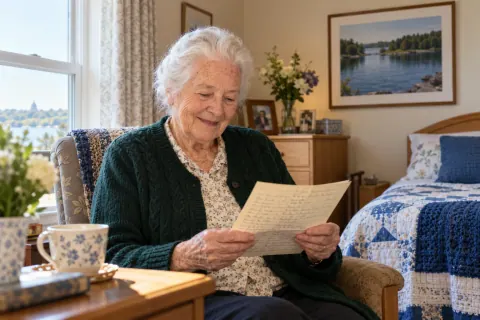
Audrey McKenzie grew up near Kingston, Ontario, and trained as a nurse.
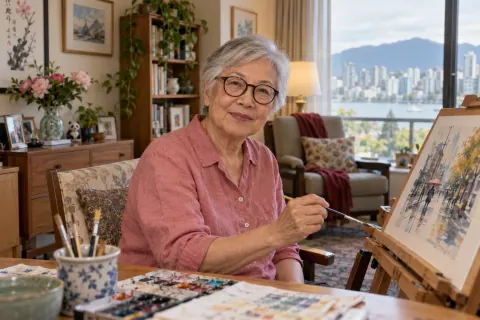
Lillian Wong grew up in Vancouver and became a secondary school art teacher.
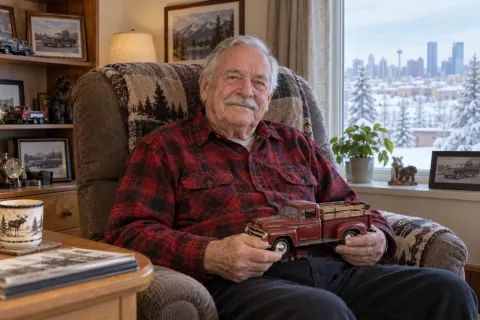
Douglas Campbell grew up near Calgary and trained as a mechanic.
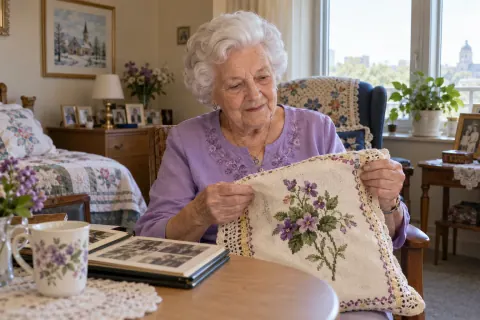
Irene Desrosiers grew up in a Franco-Manitoban family in Winnipeg and worked as a tailor, making alterations and carefully fitted everyday clothes.
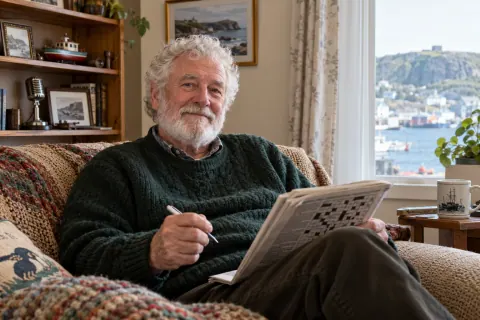
Patrick Sullivan grew up in St.
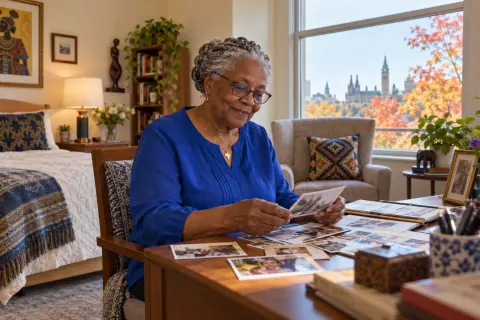
Grace Adebayo moved from Ibadan to Canada as a young adult, studied in Ottawa and became an archivist.
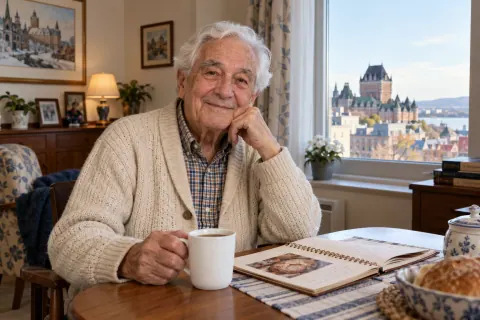
Arthur Bouchard grew up in Québec City and became a baker, working early mornings for much of his adult life.
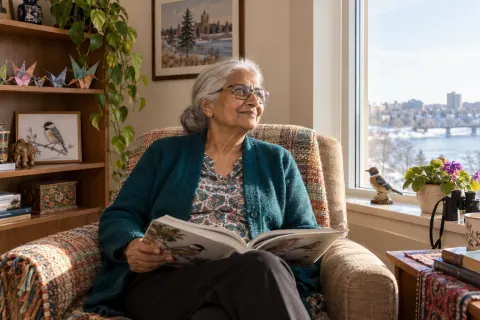
Susan Patel grew up in Saskatoon in a family of Indian heritage and became a laboratory technician.
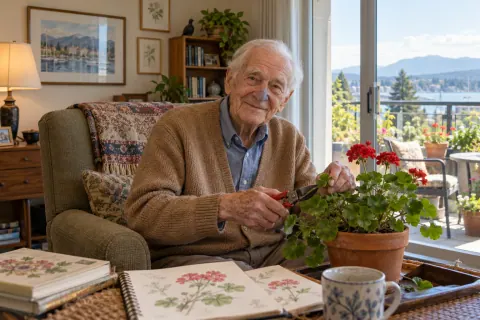
Edward Wilson grew up in Victoria, British Columbia, and spent most of his working life as a municipal gardener.