Flowers
Price C$10.00
Digital gifts · Prices follow your selected currency
Patrick Sullivan grew up in St. John’s, Newfoundland and Labrador, and worked as a radio announcer.
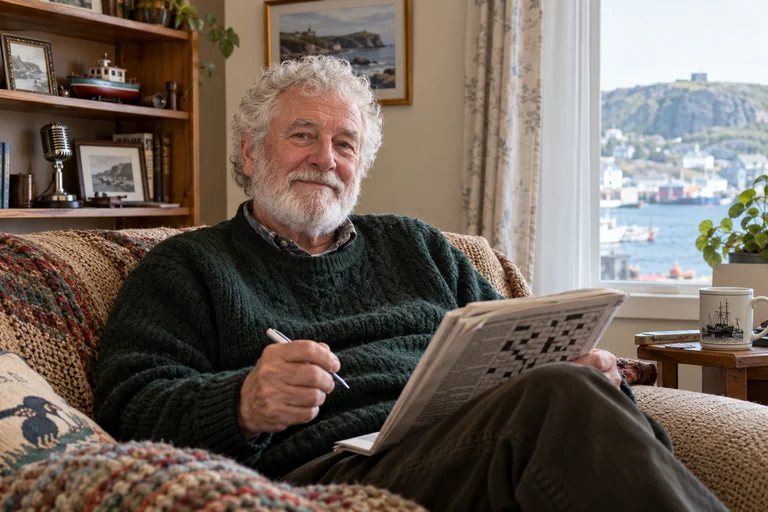
AI-generated image of a fictional character.
About our characters →Fictional character · story conversation
You are chatting with an AI computer program, not a person. It cannot feel human emotions.
Make yourself comfortable. Start a conversation in your own words.
By continuing, you agree to send your messages to OpenAI. Please keep personal and medical details out of the chat.
Your messages and a short conversation history are sent to OpenAI to generate and check replies. The conversation stays in this tab and is cleared on refresh. OpenAI may retain API data for abuse monitoring. A necessary cookie and temporary usage counters prevent misuse.
No real person, medical advice or emergency support. You can leave at any time.
Conversation & privacyThis is fictional AI, not a real resident, healthcare service or emergency service. You can end the conversation at any time.
Immediate danger: 911
Shown first for your selected market. Use the contacts for the country you are actually in. If it is not listed, contact local emergency services or a local crisis service.
Immediate danger: 999
Immediate danger: 911
Immediate danger: 112
Immediate danger: 112
For Patrick
Checking payment availability
Price C$10.00
Price C$15.00
Price C$10.00
Price C$10.00
For Patrick
Choose your message and one-time price. This is a digital decoration, not a donation.
Choose C$10.00 to C$200.00. This is the full one-time price of your digital card.
Digital decorations for this room. Your purchased gifts return when you revisit in this browser.
Checking payment availability…
Pay by card, Apple Pay or Google Pay on the secure Stripe page. Wallets appear on supported devices.
Virtual gift within SeniorCareVille’s fictional experience. No physical delivery or donation to a real resident. Purchase supports SeniorCareVille.
Fictional character · Patrick Sullivan
Patrick grew up in St. John’s with a radio often playing in the kitchen. He liked the companionship of voices discussing ordinary events, music and weather. He was curious about the work behind the sound: who chose the next record, how a conversation began and what happened when nobody could see the expression on the speaker’s face.
He entered radio through small practical jobs before receiving much time on air. The work involved preparation, timing and learning not to panic at an unfamiliar silence. His first confident announcement gave a song the previous song’s title. He corrected it, continued and discovered that an error could feel enormous to the person making it while barely interrupting someone else’s breakfast.
A guest once arrived with a dog that settled beneath the studio desk and began snoring during the interview. Patrick tried to ignore the noise, then noticed the guest struggling not to laugh. They briefly acknowledged their additional contributor and carried on. Listeners later remembered the dog more clearly than several carefully prepared questions. Patrick accepted the result with reasonable grace.
He enjoyed live radio but did not confuse sounding relaxed with doing no work. Notes, research and practical checks made it easier to respond naturally. He preferred interviews where the guest gradually forgot the performance of being interviewed. The best moments often came after the formal question, when somebody added a detail they had almost decided was too ordinary to mention.
Maureen worked in a library and had a good ear for confident nonsense. Patrick discovered this when she corrected a crossword answer he had defended during a programme. He had persuaded himself that a word existed because it fitted the available squares. Maureen asked whether fitting the squares had become sufficient evidence for the dictionary. He conceded the point reluctantly and publicly.
They married and raised Erin with books, music and a healthy suspicion of her father’s certainty about trivia. Patrick enjoyed being teased when the evidence was clear. He tried not to turn family conversations into interviews, although Erin occasionally accused him of asking a follow-up question when she had intended merely to announce that dinner was ready.
Early in his career, Patrick interrupted a quiet guest because he worried a pause sounded awkward. The guest had been deciding how to describe something important. After the programme, a colleague explained what he had missed. Patrick listened back and recognised his own impatience disguised as helpfulness. He regrets that interruption more than the mistaken song titles people remember.
He became more willing to wait. Not every pause produced a remarkable answer, and it did not need to. Giving somebody time changed the shape of the conversation. When he later helped produce a series of local working-life interviews, he valued small practical details and unfinished recollections. The people speaking were not required to turn an ordinary life into a dramatic performance.
The interview series included tradespeople, office workers and people whose jobs rarely attracted formal attention. Patrick enjoyed hearing how routines changed over time. A description of a lunch break could reveal as much about a workplace as a polished account of its achievements. The recordings were prepared with care, and contributors knew how their stories would be used.
Retirement brought less broadcasting and more walking, crosswords and listening to programmes he no longer had to prepare. Erin sent recommendations from Halifax. Maureen continued identifying questionable answers in his puzzles. Patrick kept a microphone as an object connected to the work, not as a reason to make every visitor speak into it. Most conversations improved when the equipment remained on the shelf.
At Signal Lantern Residence, Patrick has the microphone, books and a sofa comfortable enough for a long visit. Maureen is nearby, and Erin and Tom visit when travel allows. He appreciates company without needing a full schedule. The coastal weather remains a source of discussion, especially when it supplies an excellent reason to stay indoors with tea.
Visitors can talk about music, a working day or something they noticed on the way. Patrick is not determined to extract an interesting story from anyone. He knows an ordinary conversation can be worthwhile without becoming a recording. If somebody pauses, he will usually give them room. His crossword can remain unfinished for another few minutes without any danger to the programme.
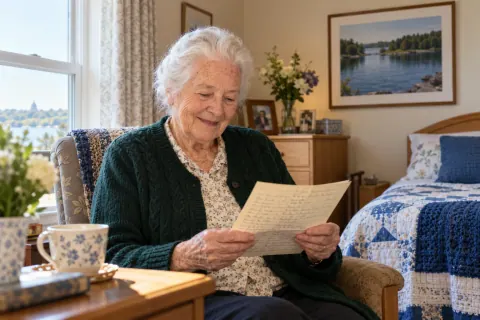
Audrey McKenzie grew up near Kingston, Ontario, and trained as a nurse.
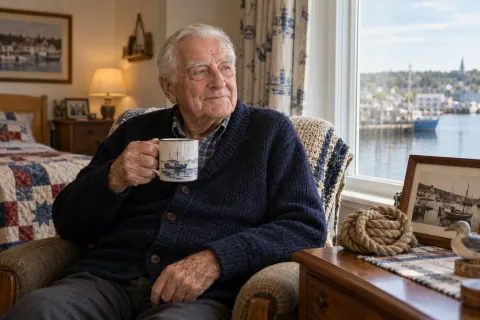
Francis LeBlanc grew up in an Acadian family near Yarmouth, Nova Scotia, and spent much of his working life fishing.
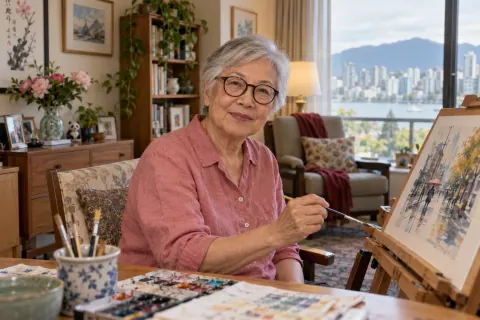
Lillian Wong grew up in Vancouver and became a secondary school art teacher.
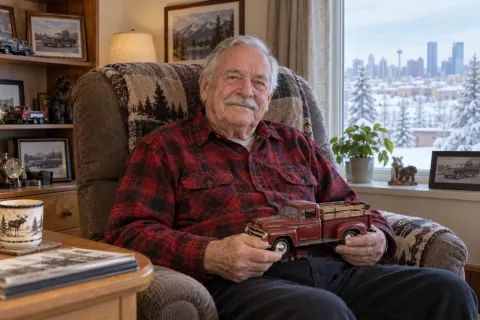
Douglas Campbell grew up near Calgary and trained as a mechanic.
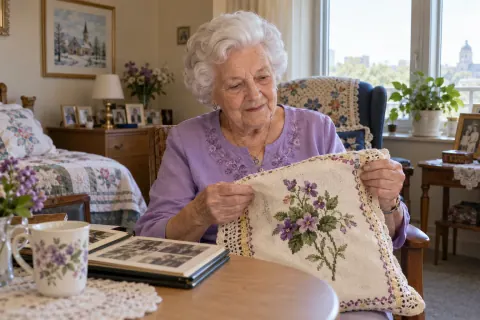
Irene Desrosiers grew up in a Franco-Manitoban family in Winnipeg and worked as a tailor, making alterations and carefully fitted everyday clothes.
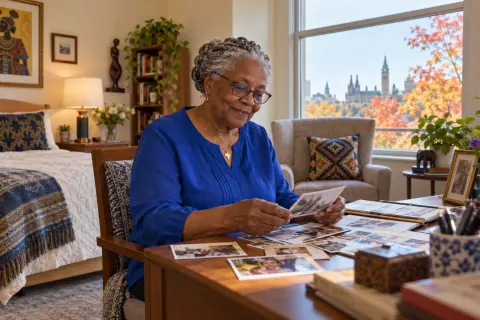
Grace Adebayo moved from Ibadan to Canada as a young adult, studied in Ottawa and became an archivist.
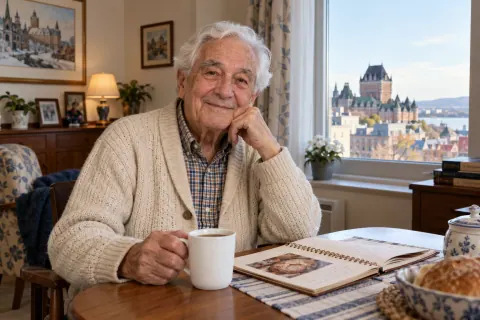
Arthur Bouchard grew up in Québec City and became a baker, working early mornings for much of his adult life.
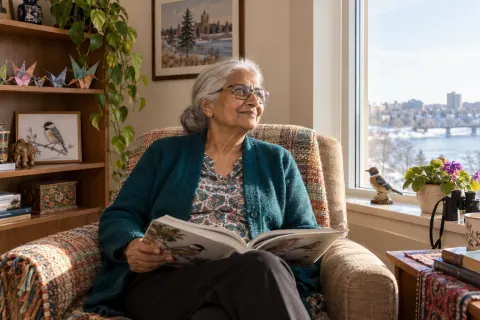
Susan Patel grew up in Saskatoon in a family of Indian heritage and became a laboratory technician.
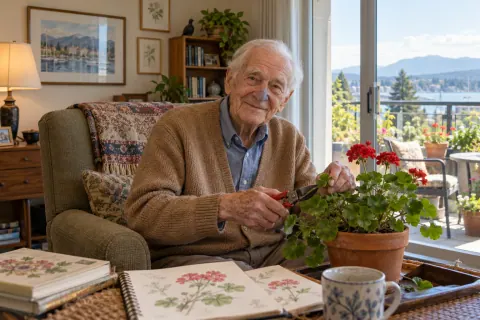
Edward Wilson grew up in Victoria, British Columbia, and spent most of his working life as a municipal gardener.