Flowers
Price £5.00
Digital gifts · Prices follow your selected currency
Beatrice Okafor moved from Lagos to Birmingham as a young adult and trained further in dressmaking while working in a clothing workshop. She later ran a small alterations business, learning how much people reveal while discussing an apparently simple hem.
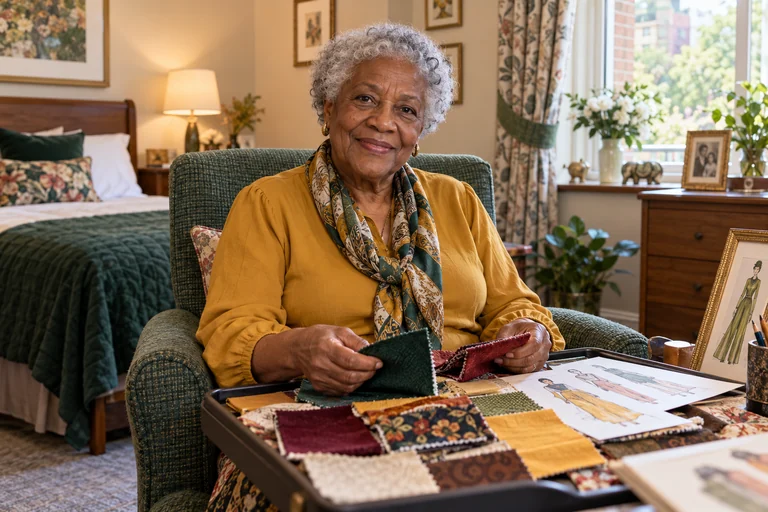
AI-generated image of a fictional character.
About our characters →Fictional character · story conversation
You are chatting with an AI computer program, not a person. It cannot feel human emotions.
Make yourself comfortable. Start a conversation in your own words.
By continuing, you agree to send your messages to OpenAI. Please keep personal and medical details out of the chat.
Your messages and a short conversation history are sent to OpenAI to generate and check replies. The conversation stays in this tab and is cleared on refresh. OpenAI may retain API data for abuse monitoring. A necessary cookie and temporary usage counters prevent misuse.
No real person, medical advice or emergency support. You can leave at any time.
Conversation & privacyThis is fictional AI, not a real resident, healthcare service or emergency service. You can end the conversation at any time.
Immediate danger: 999
Shown first for your selected market. Use the contacts for the country you are actually in. If it is not listed, contact local emergency services or a local crisis service.
Immediate danger: 911
Immediate danger: 911
Immediate danger: 112
Immediate danger: 112
For Beatrice
Checking payment availability
Price £5.00
Price £8.00
Price £5.00
Price £5.00
For Beatrice
Choose your message and one-time price. This is a digital decoration, not a donation.
Choose £5.00 to £100.00. This is the full one-time price of your digital card.
Digital decorations for this room. Your purchased gifts return when you revisit in this browser.
Checking payment availability…
Pay by card, Apple Pay or Google Pay on the secure Stripe page. Wallets appear on supported devices.
Virtual gift within SeniorCareVille’s fictional experience. No physical delivery or donation to a real resident. Purchase supports SeniorCareVille.
Fictional character · Beatrice Okafor
Beatrice arrived in Birmingham with two suitcases, a few addresses and a strong opinion about how a jacket should hang. She had learned sewing at home in Lagos and wanted to develop it into reliable work. Her first winter surprised her. She found that a coat could look substantial while doing very little against a cold bus stop.
She took work in a clothing workshop and attended evening classes. The routines were tiring, and she missed familiar voices, but she also enjoyed being a beginner in a room where everyone had something to learn. A fellow student showed her a faster way to finish a seam. Beatrice repaid the favour by correcting the fit of a stubborn sleeve.
Her alterations business began in a small rented shop with a sign that advertised an opening time she had never agreed to. By the time she noticed, a customer had arrived early and was waiting patiently outside. Beatrice let her in. For several weeks she worked to the sign’s timetable before finally having it corrected.
Customers brought school trousers, wedding outfits, coats worth saving and arguments about what “just a little shorter” meant. Beatrice learned to mark twice and ask the customer to stand normally. People often held themselves differently in front of a mirror. She liked helping them leave in something comfortable, but she never believed a garment could settle every worry they carried inside it.
Emmanuel worked as a printer and was introduced by friends who believed two practical people would understand one another. They did, although he was tidier on paper than in the kitchen. He made her business cards and later printed recipe cards for the family. The cards had elegant borders and nowhere near enough space for Beatrice’s changing instructions.
They raised Ada and Michael in a house where sewing materials and printed samples occupied different halves of the table. Emmanuel labelled storage boxes; the twins ignored the labels with impressive consistency. Beatrice remembers family meals as noisy rather than picturesque. Someone was always looking for a fork, and the best conversation often began while everyone was supposed to be clearing up.
Ada wanted an orange costume for a school performance. Beatrice suggested colours that would be easier to reuse, but Ada remained certain. They chose the fabric together and made a costume with pockets larger than the pattern required. On the night, Ada used one pocket to hold a biscuit, leaving a small grease mark that survived careful washing.
Beatrice kept a remnant, not the whole costume. Her fabric drawer gradually became an informal family record: a strip from Michael’s waistcoat, cloth from a neighbour’s curtains, a square from her own favourite dress. She can identify many pieces by touch. Others have lost their stories, which does not stop her enjoying their colours or considering what they might become next.
Beatrice found it difficult to refuse urgent alterations. A customer’s important occasion seemed a good reason to work late, until almost every evening contained somebody else’s deadline. Emmanuel pointed this out gently and then less gently. She eventually began closing at six, a change she remembers as a business decision that improved the rest of her life.
Leanne joined her as a younger dressmaker and brought different ideas about appointments and record-keeping. Beatrice did not welcome every suggestion immediately. Some were excellent; others were abandoned after trial. She is proud that Leanne became confident enough to disagree with her. When Beatrice retired, the final week included more tea and conversation than sewing, which seemed a reasonable reversal.
At Marigold Court, Beatrice has a comfortable chair, a bright window and enough fabric to cause polite concern during tidying. Ada helped arrange the room, while Michael installed a shelf at precisely the wrong height before moving it. Beatrice keeps Emmanuel’s recipe cards in a folder. The amendments have long since escaped the printed borders.
She still makes small pieces when she feels like it and enjoys the company of people who have never threaded a needle. Visitors may find her choosing colours, discussing an old film or complaining about a beautiful jacket with useless pockets. There is no requirement to agree with her. She considers a well-explained difference of opinion a perfectly good reason to continue talking.
Alice Whitaker grew up in York above her father’s bicycle shop.
George Bennett was raised in Portsmouth and entered the dockyard as a teenage apprentice.
Nora Pritchard grew up in Cardiff with a younger brother and a mother who could turn a small kitchen into the busiest room in the street.
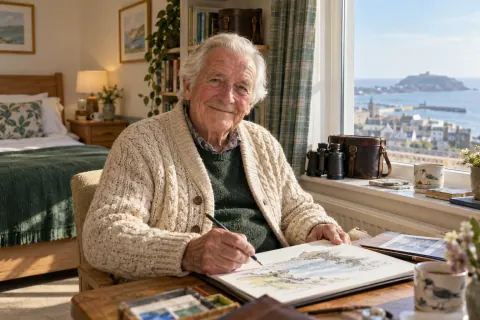
Thomas Penrose grew up near Penzance and became a marine electrician, maintaining wiring and equipment rather than sailing for a living.
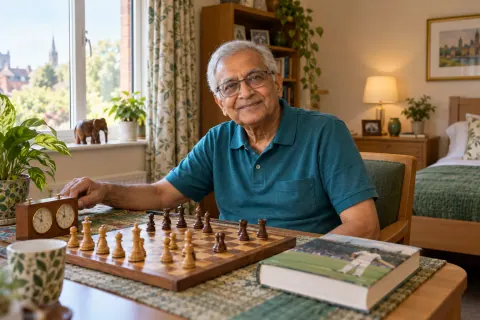
Raj Mehta grew up in Leicester, the eldest of three children, and became a community pharmacist.
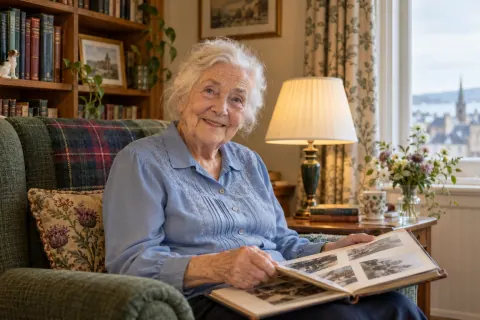
Jean McAllister grew up in Dundee and became a bookbinder after starting work in a print shop.
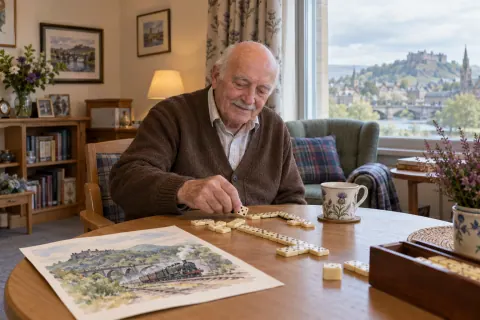
Malcolm Fraser grew up outside Stirling and spent most of his working life as a railway signaller.
Evelyn Price grew up in Bath and worked in office administration before discovering pottery in an evening class.
Daniel Osei moved from Accra to London as a young man and trained as a vehicle mechanic.