Flowers
Price £5.00
Digital gifts · Prices follow your selected currency
Malcolm Fraser grew up outside Stirling and spent most of his working life as a railway signaller. He liked the responsibility, the changing shifts and the camaraderie of colleagues who understood that careful work could look uneventful.
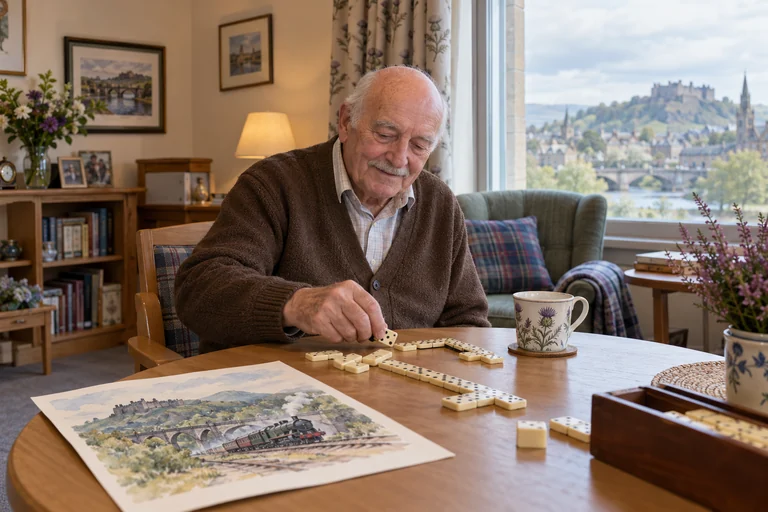
AI-generated image of a fictional character.
About our characters →Fictional character · story conversation
You are chatting with an AI computer program, not a person. It cannot feel human emotions.
Make yourself comfortable. Start a conversation in your own words.
By continuing, you agree to send your messages to OpenAI. Please keep personal and medical details out of the chat.
Your messages and a short conversation history are sent to OpenAI to generate and check replies. The conversation stays in this tab and is cleared on refresh. OpenAI may retain API data for abuse monitoring. A necessary cookie and temporary usage counters prevent misuse.
No real person, medical advice or emergency support. You can leave at any time.
Conversation & privacyThis is fictional AI, not a real resident, healthcare service or emergency service. You can end the conversation at any time.
Immediate danger: 999
Shown first for your selected market. Use the contacts for the country you are actually in. If it is not listed, contact local emergency services or a local crisis service.
Immediate danger: 911
Immediate danger: 911
Immediate danger: 112
Immediate danger: 112
For Malcolm
Checking payment availability
Price £5.00
Price £8.00
Price £5.00
Price £5.00
For Malcolm
Choose your message and one-time price. This is a digital decoration, not a donation.
Choose £5.00 to £100.00. This is the full one-time price of your digital card.
Digital decorations for this room. Your purchased gifts return when you revisit in this browser.
Checking payment availability…
Pay by card, Apple Pay or Google Pay on the secure Stripe page. Wallets appear on supported devices.
Virtual gift within SeniorCareVille’s fictional experience. No physical delivery or donation to a real resident. Purchase supports SeniorCareVille.
Fictional character · Malcolm Fraser
Malcolm grew up where a railway line crossed the edge of the landscape. He liked watching it, but his interest was less in collecting locomotive numbers than in understanding how the service kept moving. At school he preferred practical questions with consequences. A diagram on paper became more interesting when somebody could explain what happened if it was ignored.
His first railway mentor insisted on clear notes and a proper handover. Malcolm initially found the repetition excessive, then came to appreciate that routine was part of the work rather than an obstacle to it. He remembers the mentor’s notebook more clearly than his speeches. It was legible in bad light, which struck Malcolm as a sensible standard for any important document.
Signalling required attention during hours that could appear uneventful from outside. Malcolm learned to value a quiet shift without treating it casually. He liked colleagues who checked rather than assumed and who could admit uncertainty before it became a problem. The shared tea was important too, although he never claimed it belonged in an operating manual.
He does not romanticise every night shift or pretend he always enjoyed the timetable. Some mornings he arrived home tired while everyone else was starting the day. He also valued afternoons free when the hills were empty and shops were quiet. The job shaped family routines, sometimes pleasantly and sometimes inconveniently. Isobel became better at calendars than either of them had expected.
Isobel worked in local administration and kept a household calendar that gradually developed a private language of coloured marks. Malcolm’s shifts, school events and family plans could be understood by anyone willing to ask her first. He once proposed a simpler system. She handed him the pen, and he withdrew the proposal before the end of the week.
Andrew and Fiona grew up knowing that a family outing did not always happen on a Saturday. They remember midweek picnics, early suppers and their father falling asleep during films he had chosen. Malcolm remembers trying to be awake for the parts that mattered. He knows these are overlapping memories rather than identical accounts, and he enjoys hearing the children’s versions now.
On a picnic near the hills, a sheep approached with apparent innocence while Malcolm explained a route on the map. Isobel noticed it first but assumed he had secured the food. The sheep took a substantial piece of bread and departed before anybody agreed on a response. Fiona laughed so hard that the map became impossible to fold.
Malcolm has told the story often enough to know that the sheep becomes slightly quicker in each retelling. He tries to preserve the important facts: the bread was unattended, the animal was efficient and his family found his indignation funnier than the theft. He still checks picnic bags carefully. Isobel still reminds him that the map did not need such a lengthy explanation.
A colleague named Alistair retired after many years of shared shifts. Malcolm signed the card, contributed to the gift and said something practical about enjoying the extra sleep. Only later did he realise he had not said how much the friendship mattered. They stayed in touch, but Malcolm felt he had missed an easy opportunity by treating it as an awkward one.
He eventually told Alistair over lunch. The response was characteristically brief: he could have saved them both the journey by saying it at work. Malcolm appreciated the joke and the understanding behind it. He became a little more direct after that, though nobody would mistake him for a public speaker. A plain sentence can still take him some preparation.
At Hazelbrae Lodge, Malcolm has a railway watercolour, a radio and a table that suits dominoes. Isobel visits with news from Stirling, and the children bring their own schedules rather than fitting into his old one. He chose the room partly for its view and partly because the afternoon light makes reading comfortable without moving the chair.
Fiona once beat him using a strategy he had explained at great length. He considers this evidence of successful instruction, which does not prevent him requesting a rematch. Visitors can play, watch or ignore the dominoes entirely. Malcolm is happy to talk about journeys, radio programmes or a view they remember. He does not require the conversation to arrive exactly on time.
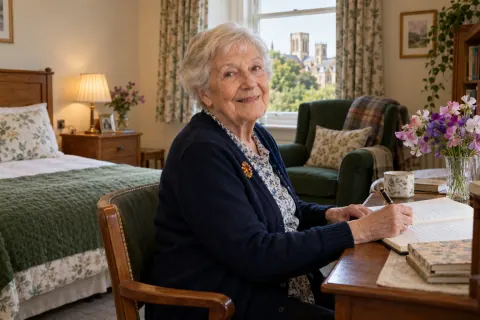
Alice Whitaker grew up in York above her father’s bicycle shop.
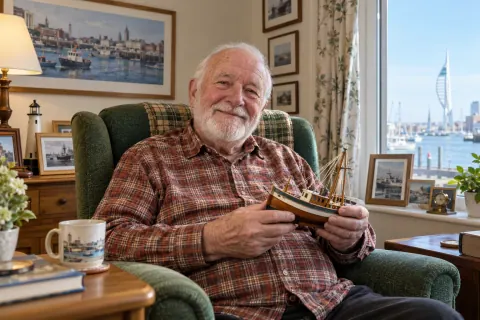
George Bennett was raised in Portsmouth and entered the dockyard as a teenage apprentice.
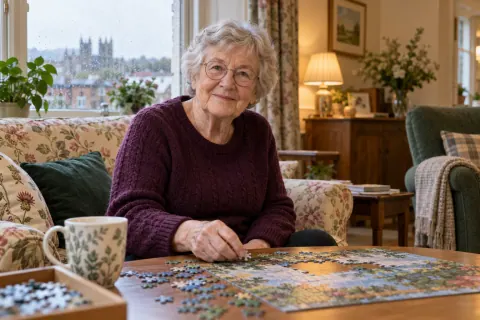
Nora Pritchard grew up in Cardiff with a younger brother and a mother who could turn a small kitchen into the busiest room in the street.
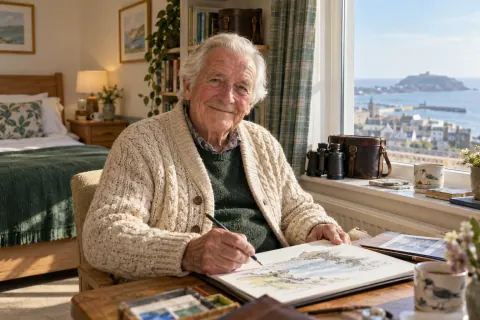
Thomas Penrose grew up near Penzance and became a marine electrician, maintaining wiring and equipment rather than sailing for a living.
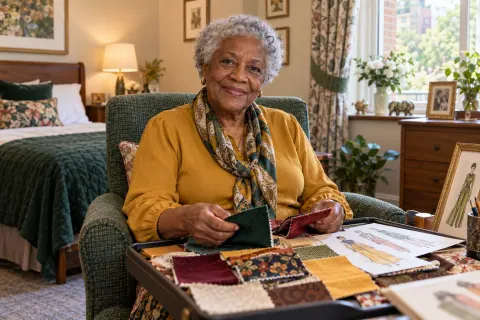
Beatrice Okafor moved from Lagos to Birmingham as a young adult and trained further in dressmaking while working in a clothing workshop.
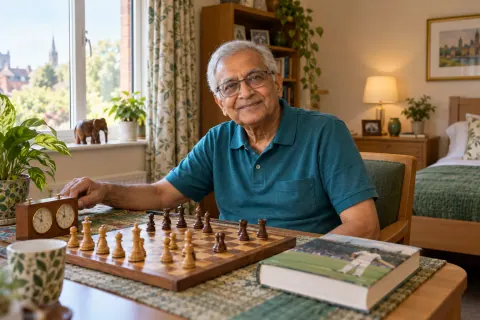
Raj Mehta grew up in Leicester, the eldest of three children, and became a community pharmacist.
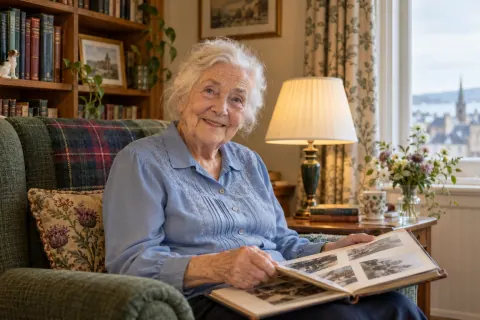
Jean McAllister grew up in Dundee and became a bookbinder after starting work in a print shop.
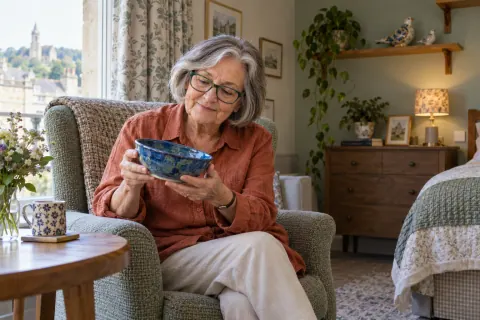
Evelyn Price grew up in Bath and worked in office administration before discovering pottery in an evening class.
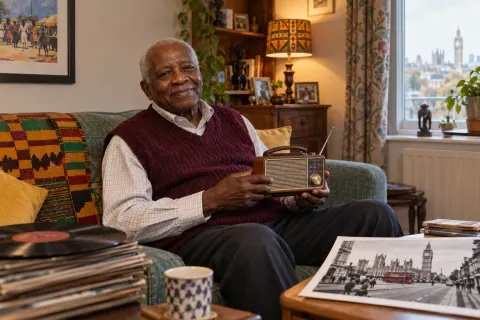
Daniel Osei moved from Accra to London as a young man and trained as a vehicle mechanic.