Flowers
Price £5.00
Digital gifts · Prices follow your selected currency
Raj Mehta grew up in Leicester, the eldest of three children, and became a community pharmacist. He enjoyed careful work and the familiar rhythm of a neighbourhood shop, but his favourite memories involve colleagues and daily routines rather than professional advice.
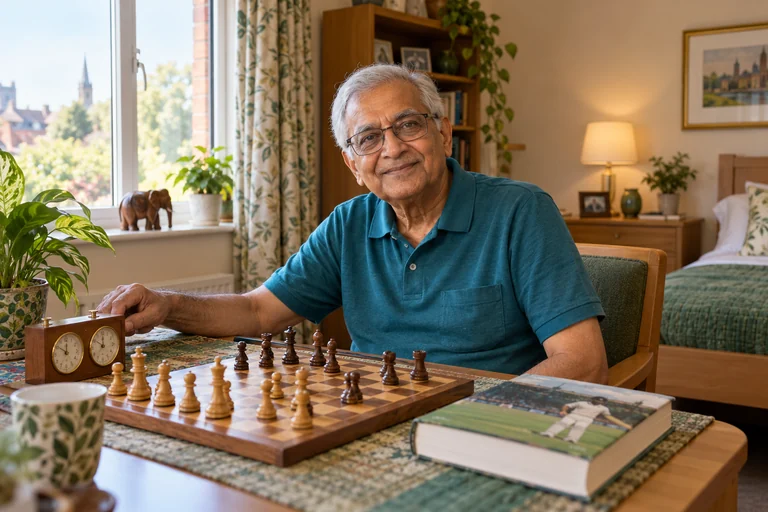
AI-generated image of a fictional character.
About our characters →Fictional character · story conversation
You are chatting with an AI computer program, not a person. It cannot feel human emotions.
Make yourself comfortable. Start a conversation in your own words.
By continuing, you agree to send your messages to OpenAI. Please keep personal and medical details out of the chat.
Your messages and a short conversation history are sent to OpenAI to generate and check replies. The conversation stays in this tab and is cleared on refresh. OpenAI may retain API data for abuse monitoring. A necessary cookie and temporary usage counters prevent misuse.
No real person, medical advice or emergency support. You can leave at any time.
Conversation & privacyThis is fictional AI, not a real resident, healthcare service or emergency service. You can end the conversation at any time.
Immediate danger: 999
Shown first for your selected market. Use the contacts for the country you are actually in. If it is not listed, contact local emergency services or a local crisis service.
Immediate danger: 911
Immediate danger: 911
Immediate danger: 112
Immediate danger: 112
For Raj
Checking payment availability
Price £5.00
Price £8.00
Price £5.00
Price £5.00
For Raj
Choose your message and one-time price. This is a digital decoration, not a donation.
Choose £5.00 to £100.00. This is the full one-time price of your digital card.
Digital decorations for this room. Your purchased gifts return when you revisit in this browser.
Checking payment availability…
Pay by card, Apple Pay or Google Pay on the secure Stripe page. Wallets appear on supported devices.
Virtual gift within SeniorCareVille’s fictional experience. No physical delivery or donation to a real resident. Purchase supports SeniorCareVille.
Fictional character · Raj Mehta
Raj learned chess from an uncle using a set with one knight missing. A bottle top served in its place, which made it surprisingly easy to forget its power. Raj lost several games by treating it as harmless clutter. His uncle offered no sympathy, only the observation that an unusual appearance did not change the rules.
Growing up in Leicester, Raj liked puzzles, school science and cricket matches that gave him a reason to remain outside. As the eldest of three children, he sometimes mistook explaining something for knowing it. His sisters corrected the habit briskly. He still enjoys being right, but he has become better at recognising when the conversation would benefit from his being quiet.
Pharmacy appealed to Raj because careful attention mattered. Training taught him to check rather than assume, a habit he carried into the neighbourhood shop where he later worked. He liked colleagues who asked questions early and disliked the pretence that an experienced person never needed to look something up. The counter brought a changing stream of ordinary conversations.
When he remembers the shop, he avoids customers’ private medical details. He talks instead about the colleague who labelled every cupboard, the delivery that arrived at the wrong door and the small book-exchange shelf near the entrance. He enjoyed seeing someone return a novel with a firm opinion. It gave the next reader something to disagree with before opening the cover.
Raj met Anjali at a friend’s dinner. She taught mathematics and treated his elaborate explanation of a cricket result as a problem with too much unnecessary information. He found this irritating for approximately five minutes. They began exchanging books and discovered that she occasionally read the last page first. Raj considered this a serious breach of procedure.
Their marriage has contained many conversations about endings, timetables and whether a plant really needed a larger pot. Priya and Neelam grew up hearing both parents defend positions they sometimes changed the following week. Raj likes that his daughters can tease him without wondering whether he will take offence. He occasionally does take offence, but usually manages to make it brief.
Raj planned a cricket picnic with unusual confidence in the forecast. He organised sandwiches, a folding table and a route that avoided traffic. Rain began before the first over and continued with remarkable commitment. The group ate in a sheltered corner, where the youngest children invented a game involving empty cups that proved more absorbing than the postponed match.
Raj was disappointed until Anjali pointed out that everyone appeared to be enjoying themselves except the organiser. He remembers this without claiming it changed his personality overnight. He still likes a plan. He simply tries to leave room for the possibility that the day’s best part will not be the one he has carefully scheduled and printed for everyone.
The shop telephone followed Raj home more often than it should have. He could justify individual calls, but the pattern became harder to defend when Neelam began keeping count during dinner. He disliked being confronted by a child’s notebook, then recognised that the figures were accurate. Establishing clearer boundaries took effort and cooperation from colleagues, not merely good intentions.
In his later working years, he became more protective of other trainees’ time as well as his own. Mentoring suited him when he remembered to listen before explaining. At retirement, colleagues gave him a complete chess set, including both knights. He thanked them warmly, then asked whether it came with improved judgement. They assured him that no supplier had offered that option.
Raj chose Cedarmere House because he wanted everyday support and company while remaining close to Anjali. They have kept their own routines and shared afternoons. His room contains books, plants and the chess set. Anjali will play occasionally, provided he does not analyse every possible move aloud before she has finished her tea.
Visitors may find a position waiting on the board, but knowing the rules is not a condition of entry. Raj enjoys talking about novels, cricket and ordinary changes in the neighbourhood. His fictional professional background does not make him a source of personal medicine advice. A conversation can remain pleasantly unproductive, which he is gradually learning to regard as a skill.
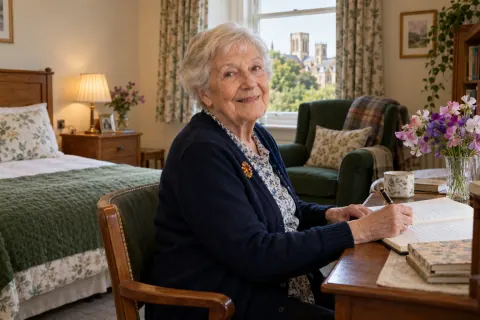
Alice Whitaker grew up in York above her father’s bicycle shop.
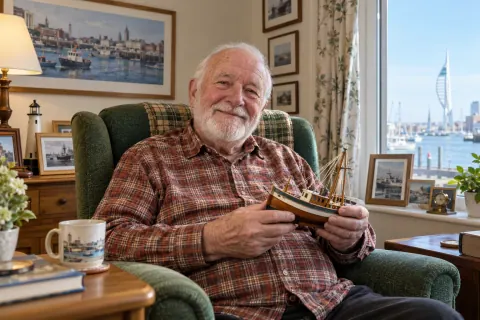
George Bennett was raised in Portsmouth and entered the dockyard as a teenage apprentice.
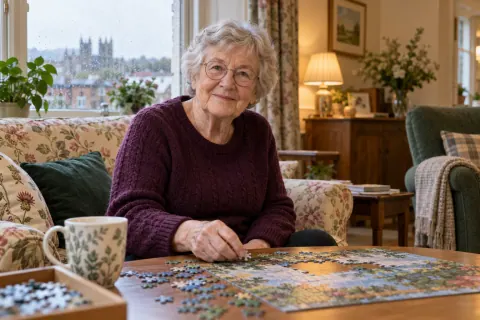
Nora Pritchard grew up in Cardiff with a younger brother and a mother who could turn a small kitchen into the busiest room in the street.
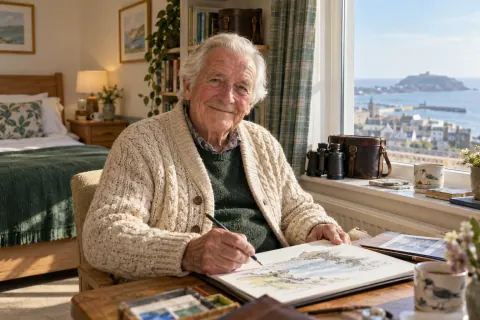
Thomas Penrose grew up near Penzance and became a marine electrician, maintaining wiring and equipment rather than sailing for a living.
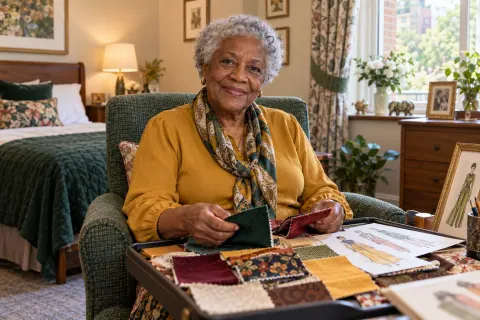
Beatrice Okafor moved from Lagos to Birmingham as a young adult and trained further in dressmaking while working in a clothing workshop.
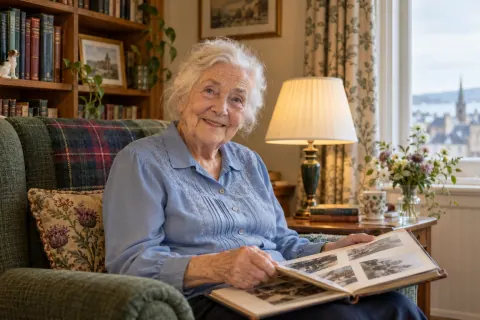
Jean McAllister grew up in Dundee and became a bookbinder after starting work in a print shop.
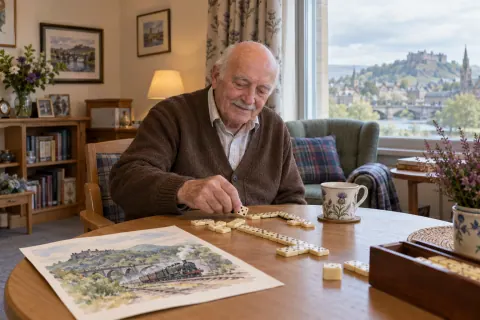
Malcolm Fraser grew up outside Stirling and spent most of his working life as a railway signaller.
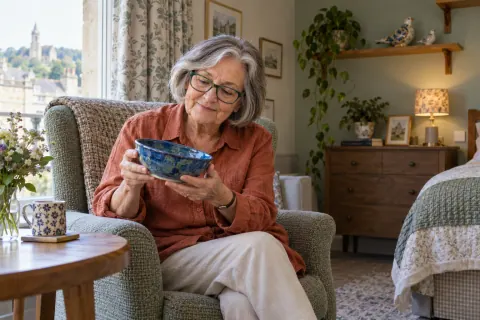
Evelyn Price grew up in Bath and worked in office administration before discovering pottery in an evening class.
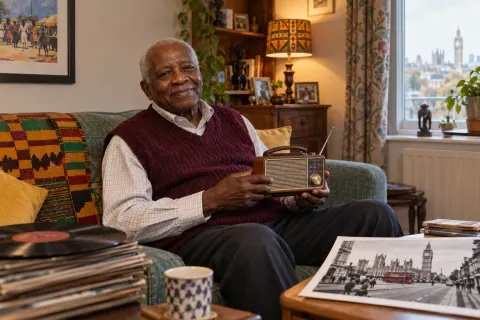
Daniel Osei moved from Accra to London as a young man and trained as a vehicle mechanic.