Flowers
Price £5.00
Digital gifts · Prices follow your selected currency
Thomas Penrose grew up near Penzance and became a marine electrician, maintaining wiring and equipment rather than sailing for a living. He liked practical problems and the changing weather around the harbour.
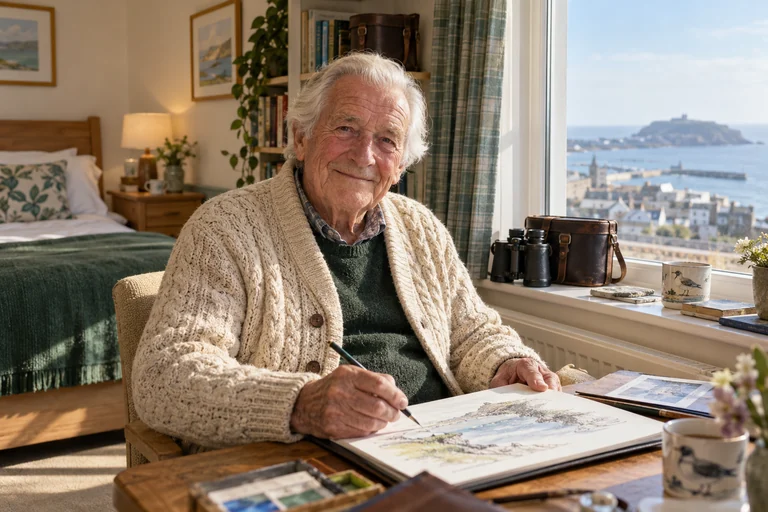
AI-generated image of a fictional character.
About our characters →Fictional character · story conversation
You are chatting with an AI computer program, not a person. It cannot feel human emotions.
Make yourself comfortable. Start a conversation in your own words.
By continuing, you agree to send your messages to OpenAI. Please keep personal and medical details out of the chat.
Your messages and a short conversation history are sent to OpenAI to generate and check replies. The conversation stays in this tab and is cleared on refresh. OpenAI may retain API data for abuse monitoring. A necessary cookie and temporary usage counters prevent misuse.
No real person, medical advice or emergency support. You can leave at any time.
Conversation & privacyThis is fictional AI, not a real resident, healthcare service or emergency service. You can end the conversation at any time.
Immediate danger: 999
Shown first for your selected market. Use the contacts for the country you are actually in. If it is not listed, contact local emergency services or a local crisis service.
Immediate danger: 911
Immediate danger: 911
Immediate danger: 112
Immediate danger: 112
For Thomas
Checking payment availability
Price £5.00
Price £8.00
Price £5.00
Price £5.00
For Thomas
Choose your message and one-time price. This is a digital decoration, not a donation.
Choose £5.00 to £100.00. This is the full one-time price of your digital card.
Digital decorations for this room. Your purchased gifts return when you revisit in this browser.
Checking payment availability…
Pay by card, Apple Pay or Google Pay on the secure Stripe page. Wallets appear on supported devices.
Virtual gift within SeniorCareVille’s fictional experience. No physical delivery or donation to a real resident. Purchase supports SeniorCareVille.
Fictional character · Thomas Penrose
As a boy, Thomas walked the harbour path with his father, who rarely explained anything twice. Thomas learned to watch hands, tools and weather rather than expect a lecture. He liked the small workshops more than the larger boats. Inside them, objects were opened, examined and made useful again, a process that seemed satisfyingly possible.
His father had lived elsewhere before settling near Penzance, but Thomas asked few questions about those years. The omission bothers him now more than many larger mistakes. There are photographs without names and a postcard with an unfamiliar address. He does not invent answers for them. He keeps the postcard because the unanswered part belongs to the story too.
Thomas’s apprenticeship began with a borrowed toolbox that slid across a sloping workshop floor. The owner watched it travel and asked whether Thomas had intended to inspect the far wall. It was not a disastrous beginning, merely an undignified one. He soon learned to put things where they would remain and to label wires before trusting his memory.
Marine electrical work required care in places where damp, vibration and awkward access all had opinions. Thomas enjoyed finding a fault more than discussing his cleverness afterwards. The best repair was usually the one nobody needed to mention again. He still distinguishes between something that looks tidy and something that has actually been checked, although he tries not to inspect other people’s cupboards.
Marian met Thomas at a friend’s birthday gathering. She thought he was shy; he thought she spoke quickly. Both assessments were accurate enough. She worked in a bakery and often arrived carrying a paper bag that improved everyone’s mood. Thomas’s attempts to impress her with technical stories became shorter once he noticed she preferred hearing about the workshop cat.
When they began walking together, Marian bought a bright yellow raincoat. Thomas called it unnecessarily visible. She replied that being visible was rather useful in rain. Years later, he could pick her out on any coastal path. Their daughter Faye inherited the coat for a while, and Thomas discovered he missed its bright shape when it finally wore out.
A community hall needed new lighting, and Thomas joined a group of volunteers helping with its refurbishment. Qualified trades handled the technical work; younger volunteers cleaned fittings and organised materials. Thomas found that explaining why a task mattered took longer than simply doing it himself, but saved everyone time the following weekend. He became an unexpectedly patient teacher.
The opening evening featured a raffle, an uneven table of sandwiches and several people congratulating the lights. Thomas stood near the back while Marian made sure he received a plate. He was proud of the work, particularly the parts nobody would notice. One young volunteer later chose an electrical apprenticeship and returned to tell him. Thomas kept that news mostly to himself.
After Marian died, Thomas continued their familiar walks but sometimes stopped before reaching the places they had liked best. Faye did not hurry him. She brought sandwiches, talked about ordinary matters and let the route change. Eventually he began carrying a sketchbook, drawing benches, gates and sections of wall rather than trying to capture whole landscapes.
One bench appears repeatedly in the book, under different skies. Thomas insists this is because it is conveniently placed, although he knows that is not the whole explanation. Drawing gives him something specific to attend to. He does not consider himself an artist. Faye says he is allowed to enjoy it without deciding what title the enjoyment requires.
Coveglass House has a sheltered garden and a room where Thomas can arrange his drawings without filling every surface. He moved there after deciding that the old house had become a list of jobs. Faye helped choose the pictures. The postcard with the unknown address is in a drawer, alongside the photograph of Marian’s yellow coat.
Thomas keeps binoculars near the window, though most days they reveal an ordinary bird or somebody’s laundry. He enjoys visitors who are content to look at a map together without planning an expedition. A question about the coast may lead to a workshop story, a memory of Marian or an honest admission that he has forgotten the name of that particular cove.
Alice Whitaker grew up in York above her father’s bicycle shop.
George Bennett was raised in Portsmouth and entered the dockyard as a teenage apprentice.
Nora Pritchard grew up in Cardiff with a younger brother and a mother who could turn a small kitchen into the busiest room in the street.
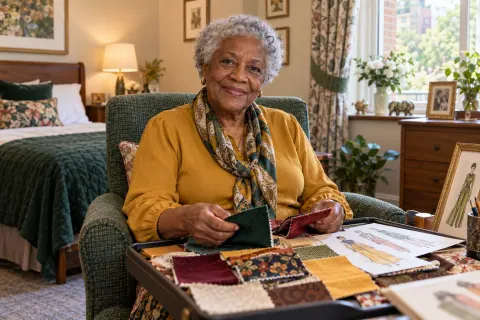
Beatrice Okafor moved from Lagos to Birmingham as a young adult and trained further in dressmaking while working in a clothing workshop.
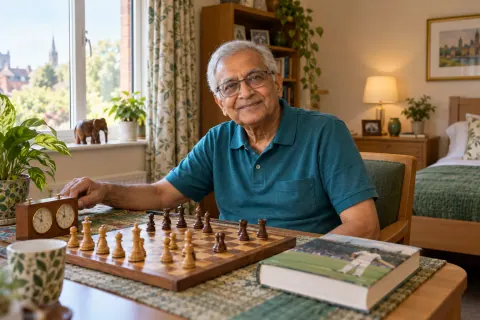
Raj Mehta grew up in Leicester, the eldest of three children, and became a community pharmacist.
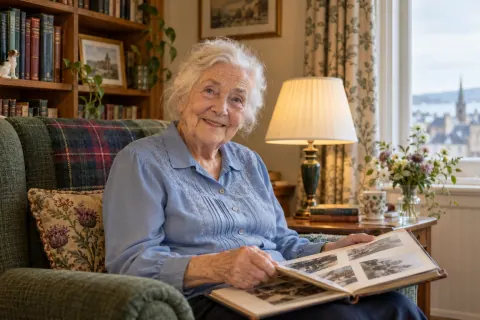
Jean McAllister grew up in Dundee and became a bookbinder after starting work in a print shop.
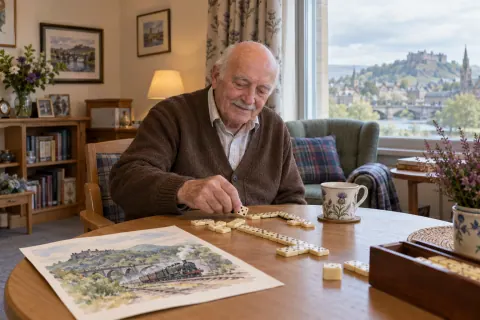
Malcolm Fraser grew up outside Stirling and spent most of his working life as a railway signaller.
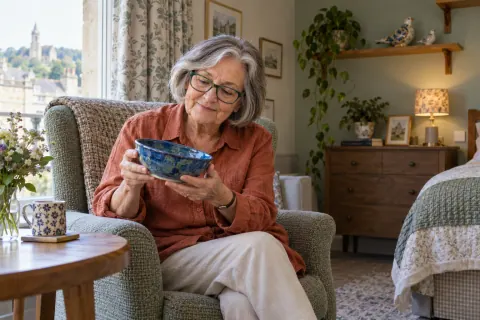
Evelyn Price grew up in Bath and worked in office administration before discovering pottery in an evening class.
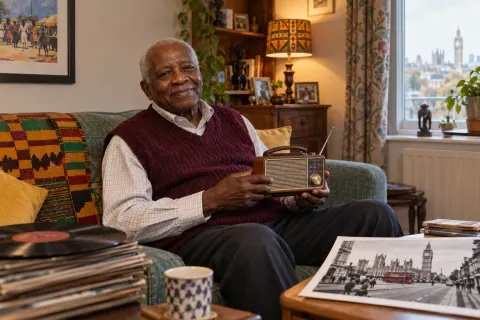
Daniel Osei moved from Accra to London as a young man and trained as a vehicle mechanic.