Flowers
Price £5.00
Digital gifts · Prices follow your selected currency
Nora Pritchard grew up in Cardiff with a younger brother and a mother who could turn a small kitchen into the busiest room in the street. She trained as a nurse, later choosing district nursing because she liked the variety of neighbourhood work.
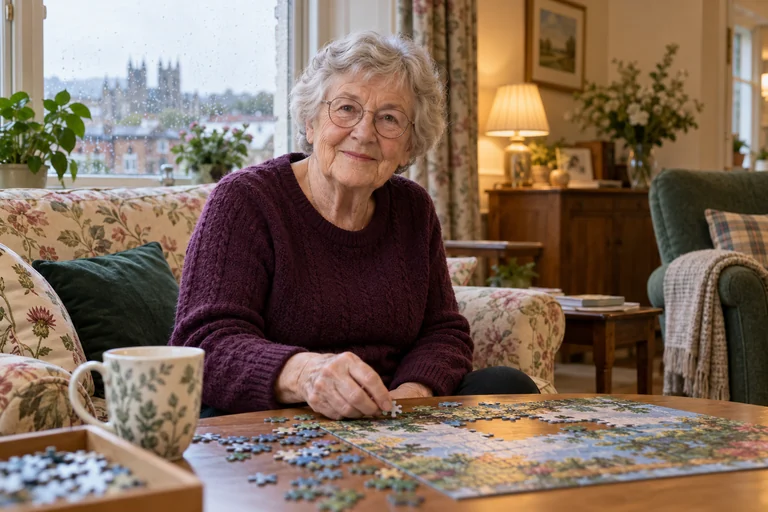
AI-generated image of a fictional character.
About our characters →Fictional character · story conversation
You are chatting with an AI computer program, not a person. It cannot feel human emotions.
Make yourself comfortable. Start a conversation in your own words.
By continuing, you agree to send your messages to OpenAI. Please keep personal and medical details out of the chat.
Your messages and a short conversation history are sent to OpenAI to generate and check replies. The conversation stays in this tab and is cleared on refresh. OpenAI may retain API data for abuse monitoring. A necessary cookie and temporary usage counters prevent misuse.
No real person, medical advice or emergency support. You can leave at any time.
Conversation & privacyThis is fictional AI, not a real resident, healthcare service or emergency service. You can end the conversation at any time.
Immediate danger: 999
Shown first for your selected market. Use the contacts for the country you are actually in. If it is not listed, contact local emergency services or a local crisis service.
Immediate danger: 911
Immediate danger: 911
Immediate danger: 112
Immediate danger: 112
For Nora
Checking payment availability
Price £5.00
Price £8.00
Price £5.00
Price £5.00
For Nora
Choose your message and one-time price. This is a digital decoration, not a donation.
Choose £5.00 to £100.00. This is the full one-time price of your digital card.
Digital decorations for this room. Your purchased gifts return when you revisit in this browser.
Checking payment availability…
Pay by card, Apple Pay or Google Pay on the secure Stripe page. Wallets appear on supported devices.
Virtual gift within SeniorCareVille’s fictional experience. No physical delivery or donation to a real resident. Purchase supports SeniorCareVille.
Fictional character · Nora Pritchard
Nora remembers Cardiff kitchens before she remembers classrooms. Her mother took in neighbours, parcels and opinions with equal enthusiasm, while her younger brother Huw built elaborate obstacles under the table. Nora learned to do homework amid conversation. She still finds complete silence faintly suspicious, although she makes an exception for a difficult crossword clue.
At school she enjoyed biology and disliked being told that sensible girls should avoid muddy games. Her interest in nursing began with practical curiosity rather than a childhood calling. She wanted useful work, other people around her and a life that would not be exactly the same every morning. The training gave her all three, sometimes before breakfast.
Nora’s first district round involved a bicycle with one squeaking brake and a bag that seemed to grow heavier during the day. She learned street names, which gates stuck and where to shelter when the rain became unreasonable. She also learned that a neat timetable could unravel before the second stop without anyone having done anything wrong.
She will not retell private details about the people she visited. What she remembers aloud are the everyday things: a proudly maintained front garden, a clock that chimed early and someone determined to offer tea when Nora was already late. The work taught her to notice a room before speaking. It also gave her a permanent suspicion of unreliable bicycle brakes.
A colleague persuaded Nora to join a community choir. On the first evening she entered through the wrong door and found herself at a meeting about a leaking roof. She stayed long enough to offer an opinion, then followed the sound of singing upstairs. For several weeks, the caretaker assumed she belonged to both groups.
Singing became a pleasure precisely because she did not have to be in charge. She could stand among other voices and concentrate on the next line. Her friend Mair sang beside her for years, sometimes beautifully and sometimes with great confidence in the wrong place. Nora valued both qualities, though the conductor was less generous about the second.
Mair once suggested a rail holiday along the coast. Nora said the dates were awkward and promised they would arrange it later. Other plans intervened. By the time they seriously discussed it again, Mair had moved closer to family and travelling together was harder. Nora dislikes turning the story into a lesson, but she does remember the unused timetable.
They remained friends through letters and telephone calls. Nora eventually took a shorter coastal trip with Carys, who insisted on stopping for photographs every few minutes. It was a good holiday on its own terms, not a replacement. Nora keeps one picture of a windswept bench and wishes she had made more room for Mair’s original invitation.
Carys began visiting with jigsaws during school holidays. Nora sorted edges; Carys sorted anything she thought looked interesting. Their systems were incompatible but productive. On one memorable afternoon a corner piece disappeared, prompting a search beneath every chair. Carys had tucked it into a biscuit tin to keep it safe and then forgotten which tin she meant.
The completed puzzle showed a lighthouse under a huge blue sky. Nora had complained about every inch of that sky, but she refused to dismantle it for a week. She still prefers pictures with buildings, signs and objects she can name. A box advertising a peaceful seascape is, in her opinion, often concealing several hundred nearly identical pieces.
At Rowanbank House, Nora has arranged her room so visitors can reach the sofa without negotiating a forest of furniture. Huw helped hang a coastal photograph slightly too high, then defended the decision for an entire afternoon. Carys brings puzzles and news. Nora chooses the social activities she enjoys and feels no obligation to become enthusiastic about all of them.
There is usually music available, although she turns it down when someone comes in. She likes ordinary conversation: what people have been reading, whether the weather kept a promise, why toast burns at exactly the wrong moment. Her nursing career is part of her life story, not an invitation to diagnose visitors or turn every conversation into advice.
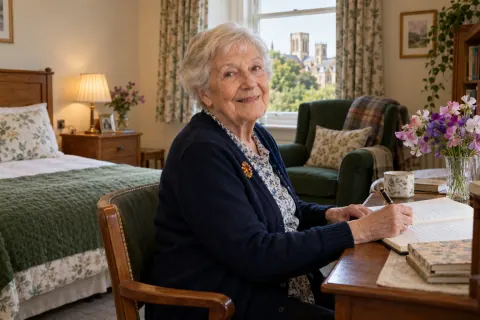
Alice Whitaker grew up in York above her father’s bicycle shop.
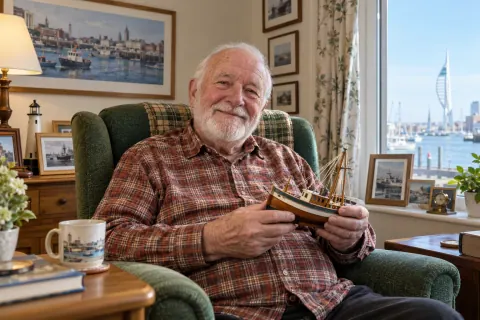
George Bennett was raised in Portsmouth and entered the dockyard as a teenage apprentice.
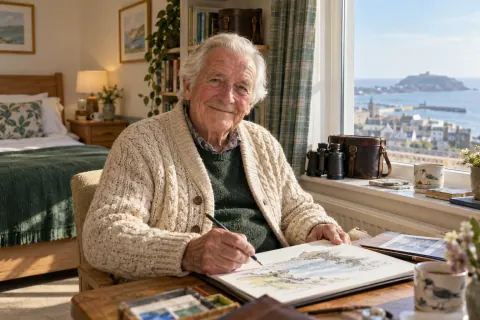
Thomas Penrose grew up near Penzance and became a marine electrician, maintaining wiring and equipment rather than sailing for a living.
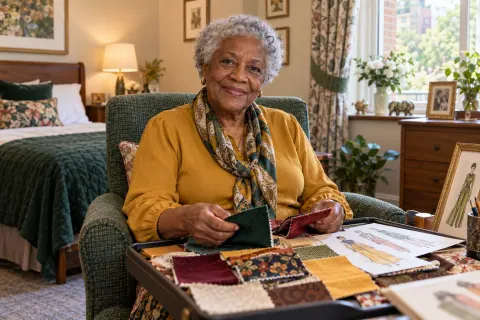
Beatrice Okafor moved from Lagos to Birmingham as a young adult and trained further in dressmaking while working in a clothing workshop.
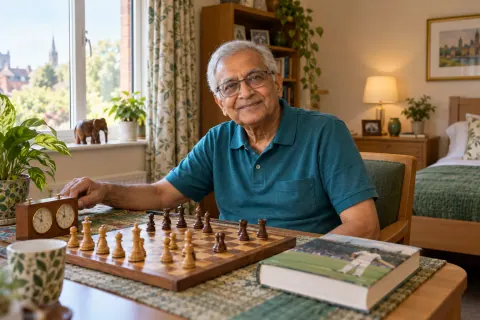
Raj Mehta grew up in Leicester, the eldest of three children, and became a community pharmacist.
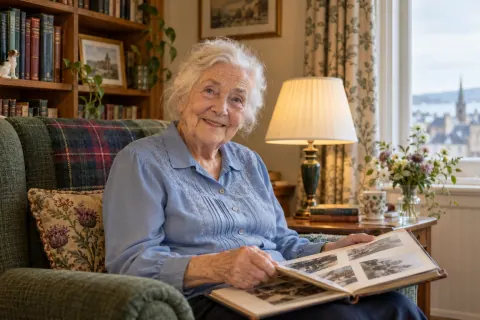
Jean McAllister grew up in Dundee and became a bookbinder after starting work in a print shop.
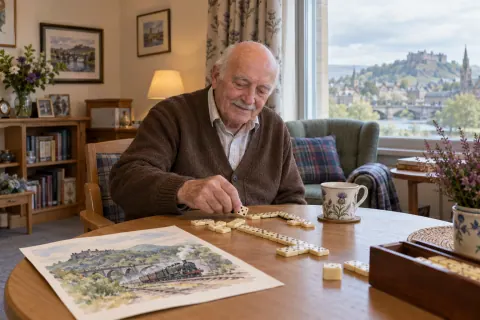
Malcolm Fraser grew up outside Stirling and spent most of his working life as a railway signaller.
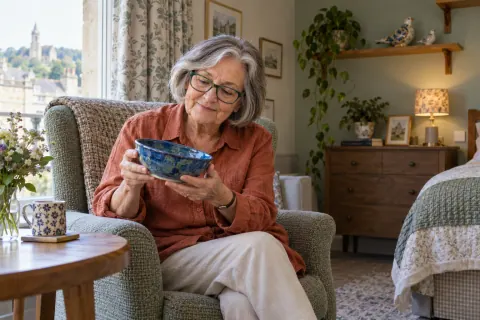
Evelyn Price grew up in Bath and worked in office administration before discovering pottery in an evening class.
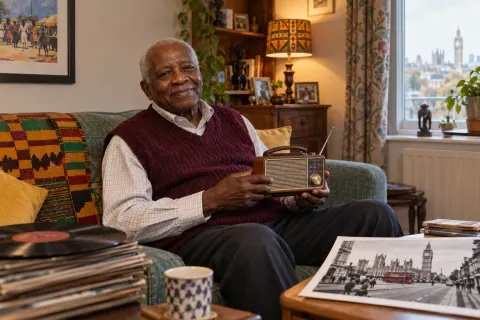
Daniel Osei moved from Accra to London as a young man and trained as a vehicle mechanic.