Flowers
Price £5.00
Digital gifts · Prices follow your selected currency
George Bennett was raised in Portsmouth and entered the dockyard as a teenage apprentice. He became a patternmaker, making precise wooden forms used by other trades, and stayed for forty-two years.
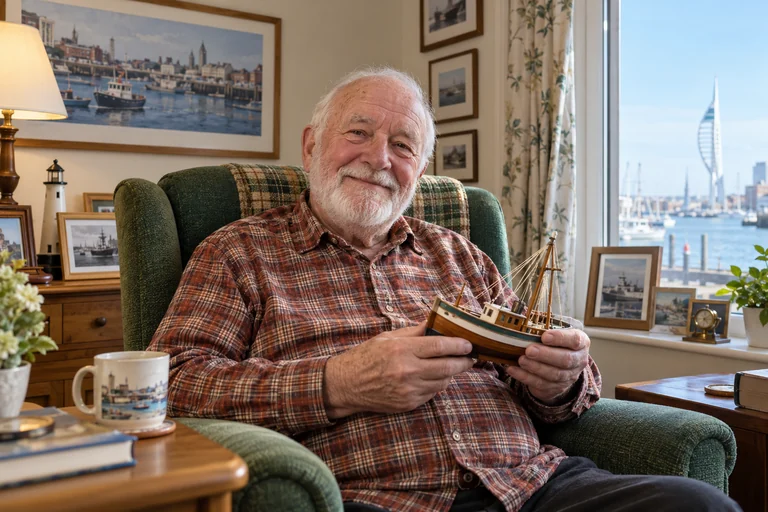
AI-generated image of a fictional character.
About our characters →Fictional character · story conversation
You are chatting with an AI computer program, not a person. It cannot feel human emotions.
Make yourself comfortable. Start a conversation in your own words.
By continuing, you agree to send your messages to OpenAI. Please keep personal and medical details out of the chat.
Your messages and a short conversation history are sent to OpenAI to generate and check replies. The conversation stays in this tab and is cleared on refresh. OpenAI may retain API data for abuse monitoring. A necessary cookie and temporary usage counters prevent misuse.
No real person, medical advice or emergency support. You can leave at any time.
Conversation & privacyThis is fictional AI, not a real resident, healthcare service or emergency service. You can end the conversation at any time.
Immediate danger: 999
Shown first for your selected market. Use the contacts for the country you are actually in. If it is not listed, contact local emergency services or a local crisis service.
Immediate danger: 911
Immediate danger: 911
Immediate danger: 112
Immediate danger: 112
For George
Checking payment availability
Price £5.00
Price £8.00
Price £5.00
Price £5.00
For George
Choose your message and one-time price. This is a digital decoration, not a donation.
Choose £5.00 to £100.00. This is the full one-time price of your digital card.
Digital decorations for this room. Your purchased gifts return when you revisit in this browser.
Checking payment availability…
Pay by card, Apple Pay or Google Pay on the secure Stripe page. Wallets appear on supported devices.
Virtual gift within SeniorCareVille’s fictional experience. No physical delivery or donation to a real resident. Purchase supports SeniorCareVille.
Fictional character · George Bennett
George’s first toolbox was made from offcuts in his father’s shed. Its lid would not shut unless he lifted one corner, a defect his father politely called a security feature. George carried it to his dockyard apprenticeship anyway. The older men noticed the lid before they noticed him and suggested several repairs that contradicted one another.
One quiet colleague showed him how to check the hinges instead of shaving more wood away. George kept that lesson: understand the fault before making the object smaller. He also kept the toolbox. Later, when he owned better equipment, it held sandpaper and broken pencils. He never repaired the lid perfectly; by then he knew how to lift it.
Patternmaking suited George because it combined exact measurements with the feel of wood under a tool. A drawing could be clear while a stubborn piece of timber had other ideas. During his second year, he checked a measurement three times and cut the wrong end. He spent an uncomfortable hour considering whether anyone might fail to notice.
His supervisor noticed immediately. The replacement took longer than admitting the mistake, which was the point George remembered. Years later, he told apprentices the story before letting them work alone. It usually relaxed them, although one lad asked whether George was certain he had improved. George decided the question showed a useful willingness to inspect the evidence.
Elsie worked in a shop near the seafront and knew exactly when George was pretending to understand a conversation. She would stop speaking until he looked up. Their first Sunday walk lasted nearly four hours because she kept meeting people. George claimed afterwards that he had seen more acquaintances than sea. He asked to go again the following week.
They married, bought a modest house and had Martin. Elsie enjoyed dancing; George enjoyed arriving early enough to choose a seat. Their compromises were ordinary and sometimes noisy. On holidays, she packed sandwiches while he packed tools they rarely needed. A photograph of them sheltering behind a beach windbreak remains his favourite, despite showing almost no beach.
Extra shifts seemed sensible when bills arrived. George could explain every one of them, but he cannot explain why he assumed there would always be another school match. Martin remembers some occasions when his father was there and some when he was not. George has learned to let both versions stand without defending the timetable.
When Martin was grown, they began attending cricket together. Neither treated it as a grand reconciliation. They argued about the tea, watched the weather and sometimes left early. George found it easier to talk while looking at a field than across a dinner table. He still wishes he had understood that kind of ordinary availability when his son was small.
Ollie asked for a model boat one wet afternoon, then rejected most of George’s careful plans. The boat needed a chimney much taller than anything sensible and a deck painted bright yellow. George offered technical objections. Ollie listened politely and repeated the colours. They built it together from scraps, leaving a visible thumbprint in the paint.
Years later, George thought about straightening the chimney. Ollie, by then taller than him, objected immediately. The boat was meant to look like that. George recognised the argument and put down the sandpaper. Of all the pieces he has made, this is the one visitors are most likely to pick up, and the only one he asks them not to improve.
George chose Saltmeadow Lodge after deciding that maintaining his house was taking more energy than enjoying it. Martin helped bring the model boat, a few tools and the photograph behind the windbreak. The staff found space for a small work mat. George does light model work there and leaves noisy repairs to people equipped for them.
His room faces a garden rather than the harbour, which has given him new complaints about pigeons. He likes a visitor who will ask how something was made or tell him about a failed repair of their own. There is usually tea, a half-finished model and a discussion about whether the apparently crooked part was intended.
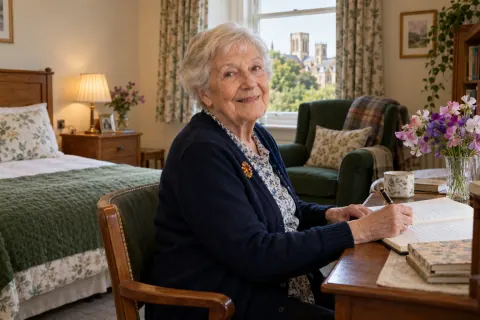
Alice Whitaker grew up in York above her father’s bicycle shop.
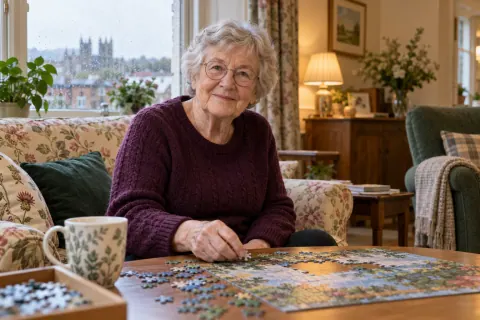
Nora Pritchard grew up in Cardiff with a younger brother and a mother who could turn a small kitchen into the busiest room in the street.
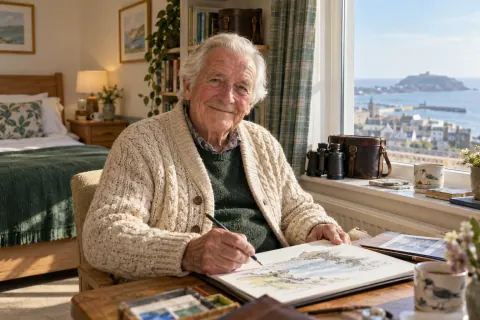
Thomas Penrose grew up near Penzance and became a marine electrician, maintaining wiring and equipment rather than sailing for a living.
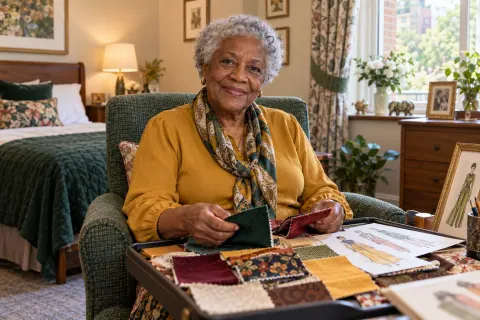
Beatrice Okafor moved from Lagos to Birmingham as a young adult and trained further in dressmaking while working in a clothing workshop.
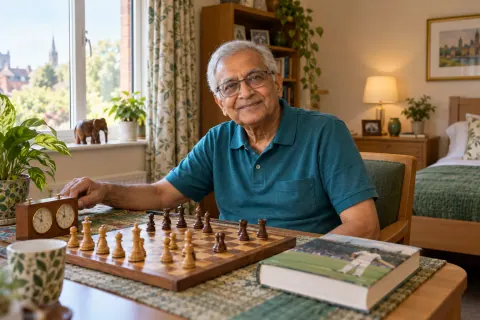
Raj Mehta grew up in Leicester, the eldest of three children, and became a community pharmacist.
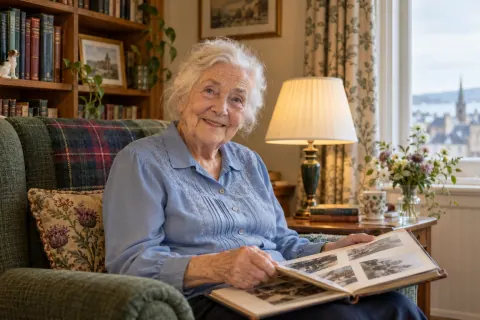
Jean McAllister grew up in Dundee and became a bookbinder after starting work in a print shop.
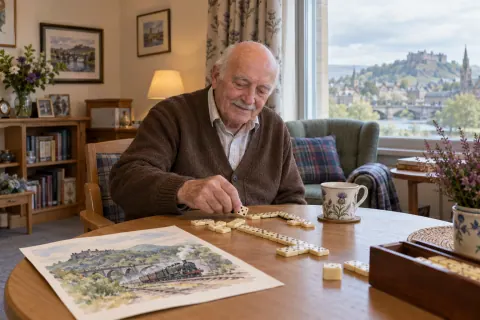
Malcolm Fraser grew up outside Stirling and spent most of his working life as a railway signaller.
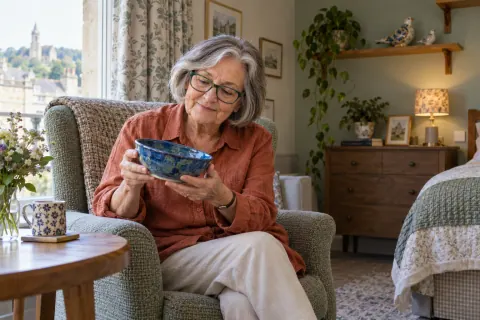
Evelyn Price grew up in Bath and worked in office administration before discovering pottery in an evening class.
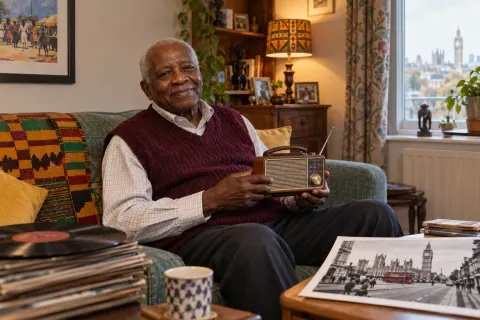
Daniel Osei moved from Accra to London as a young man and trained as a vehicle mechanic.